

Skip to content

Forest Invasion Synthesis Centre

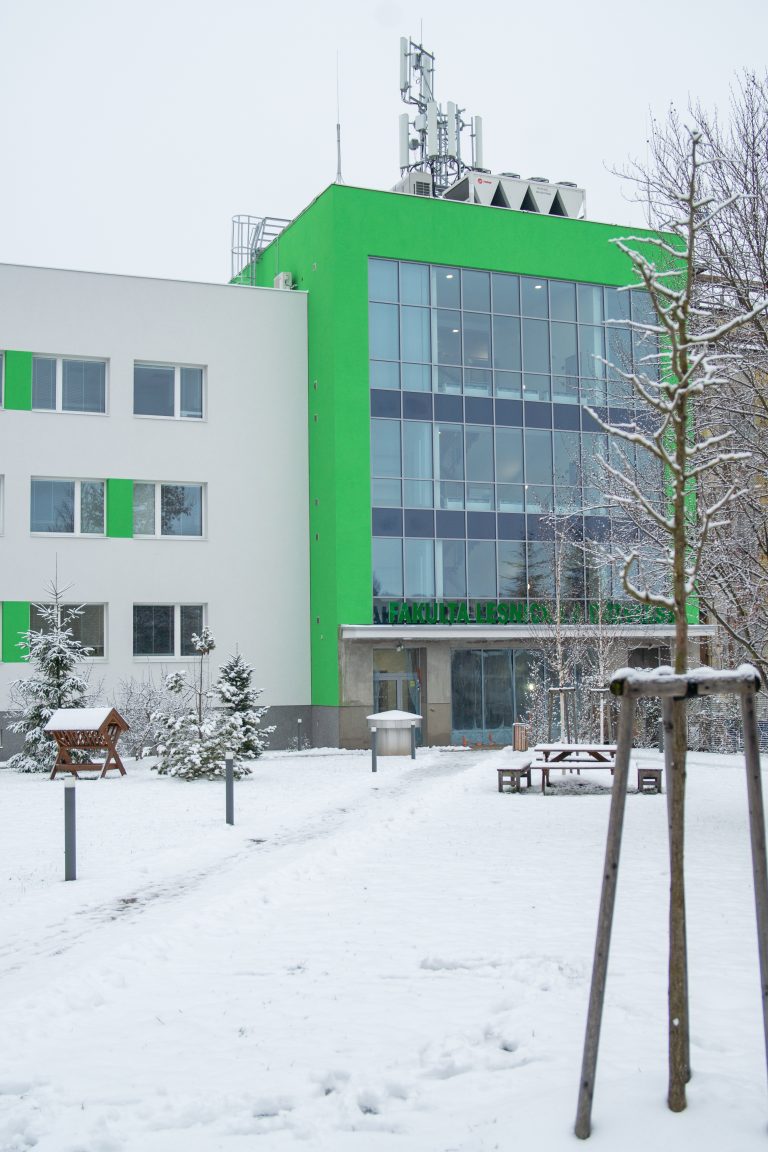
Invasive species are among the greatest threats to forest ecosystems today, disrupting biodiversity, livelihoods and economies. Based at the Czech University of Life Sciences, Faculty of Forestry and Wood Sciences — an inspiring academic environment we are proud to be part of — we investigate ecological and socio-economic aspects of invasions by plants, insects and pathogens in forest ecosystems. We apply a synthesis center model to integrate field data, global datasets, and models to clarify risks and inform decisions. We translate scientific evidence into actionable insights for managers and policymakers — protecting forests and the people who rely on them.

New Interview Out Now

Our Chief Scientist Andrew Liebhold talks about his move from the US to Europe, sharing his story and his views on attracting global research talent to Europe.

Interested in collaborating with us?

We’re always open to new partnerships. Feel free to get in touch to explore opportunities to join us.

Experts on FISC

Connecting data, researchers and practice. Leading forest invasion scientists explain why FISC and the model of synthesis centers matter.


What’s happening

Latest news

09.12.2025

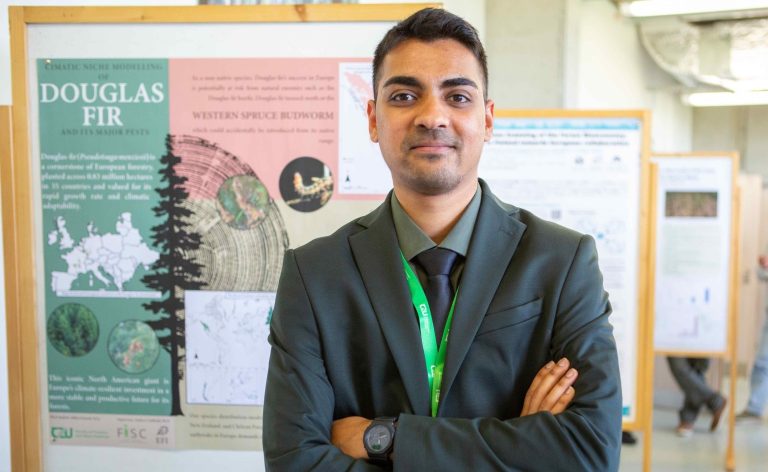
Aditya Ganesh´s talk at European Webinar on Douglas-fir Health now online

Conference
Catch up on Aditya Ganesh’s insights into emerging insect pests of Douglas-fir—his full presentation from the European webinar “Let’s Talk About Planted Forests” is now available to watch. The session, organised by IEFC, IUFRO and EFI, explores current health challenges and biotic risks facing Douglas-fir across Europe.
29.11.2025

Andrew Liebhold: vision for the Forest Invasion Synthesis Centre in Prague. From Global Threats to Global Solutions.

Lecture
In this talk, Andrew Liebhold presents his vision for the Forest Invasion Synthesis Centre in Prague — a hub designed to bring together scientists from around the world to confront one of the most pressing challenges facing forests today. It sets the stage for FISC’s mission: to advance science that not only diagnoses the problem but also guides real-world action to secure resilient forests.
26.11.2025

Kevin Chase: Invasions in Urban Forests

Lecture
Discover how urban areas shape the spread of invasive forest pests and pathogens. Kevin Chase explains why cities become hotspots for new introductions, how live plant imports and propagule pressure drive invasions, and why certain landscapes or stressed trees are more vulnerable. Learn how arborists, researchers, and city managers can strengthen urban tree health and improve resilience across parks, streets, and residential landscapes.
About FISC

Advancing Global Understanding of Forest Invasions

The Forest Invasion Synthesis Centre, Prague (FISC) at the Czech University of Life Sciences Prague advances the understanding of biological invasions in forests. Its mission is to establish a leading research group, strengthen capacity in invasion ecology, and foster innovation. The centre is led by Dr. Andrew M. Liebhold, a globally recognized leader in forest invasion science.

Advancing Global Understanding of Forest Invasions
At FISC, we aim to apply the most efficient scientific methods to maximize the value of existing data. By synthesizing global evidence and fostering collaboration, we seek to accelerate discovery and produce high-impact results that inform real-world forest management and policy.
Andrew "Sandy" M. Liebhold, Ph.D.

Andrew "Sandy" M. Liebhold, Ph.D.

Having spent most of his career as a research scientist in the USA, Liiebhold has joined the Czech University of Life Sciences in Prague to lead its newly established Forest Invasion Synthesis Centre and to advance cutting-edge research on forest ecosystems. The Centre has assembled an interdisciplinary team to conduct research and facilitate synthesis research on various aspects of biological invasions in forests.


  • Strong record of research on forest insect population ecology and biological invasions
  • Long history of international collaboration and leadership in the International Union of Forest Research Organizations
  • Extensive experience organizing and participating in working groups at synthesis centres such as NCEAS, SESYNC and NIMBios
Featured Outputs

Research

The known unknowns in international border interceptions of non-native insects.

Turner, R.M., Liebhold, A.M., Nahrung, H.F., Phillips, C.B., Yamanaka, T. & Brockerhoff, E.G.

Island biogeography theory and the assembly patterns of native versus non-native forest insects.

Mech, A.M., Liebhold, A.M., Trombik, J., Björkman, C., Gandhi, K.J.K., Lyytikäinen-Saarenmaa, P., Pureswaran, D.S., Synek, J., Klapwijk, M.J.
Conferences & meetings

Upcoming events

There are currently no internal events planned.
What are we planning?

Event calendar

December 2025
Mon
Tue
Wed
Thu
Fri
Sat
Sun
1
2
3
4
5
6
7
8
9
10
11
12
13
14
15
16
17
18
19
20
21
22
23
24
25
26
27
28
29
30
31
Join our team

How can you get involved?

We welcome ideas and initiative. Even if no position is currently open, feel free to send us your CV and a short note about your interests. We´re also excited about connecting research with practice and collaborating across disciplines. Get in touch – great ideas often start with a simple conversation.

Join our core team

Become part of an international group advancing forest invasion research. Work closely with leading experts, shape new ideas, and contribute to real-world impact.

Join our working group

Collaborate with researchers and practitioners across disciplines. Our working groups tackle key questions in forest invasions—your expertise and ideas are welcome.

Suggest new working group

Have a research idea you’d like to develop? Suggest a new working group and bring together people with shared interests to tackle emerging challenges in forest invasions.

Got another idea?

Thinking of a different way to collaborate? Whether it’s outreach, data sharing, or joint projects—we’d love to hear from you and explore the possibilities.

Project HIVE 101187384. Funded by the European Union. Views and opinions expressed are however those of the author(s) only and do not necessarily reflect those of the European Union or the European Research Executive Agency. Neither the European Union nor the granting authority can be held responsible for them.